
BREAKING: Vance Provides Replace After Marathon Iran Negotiations
Vice President JD Vance announced late Saturday evening that the United States and Iran failed to reach a lasting agreement after several hours of intense negotiations in Islamabad, Pakistan.
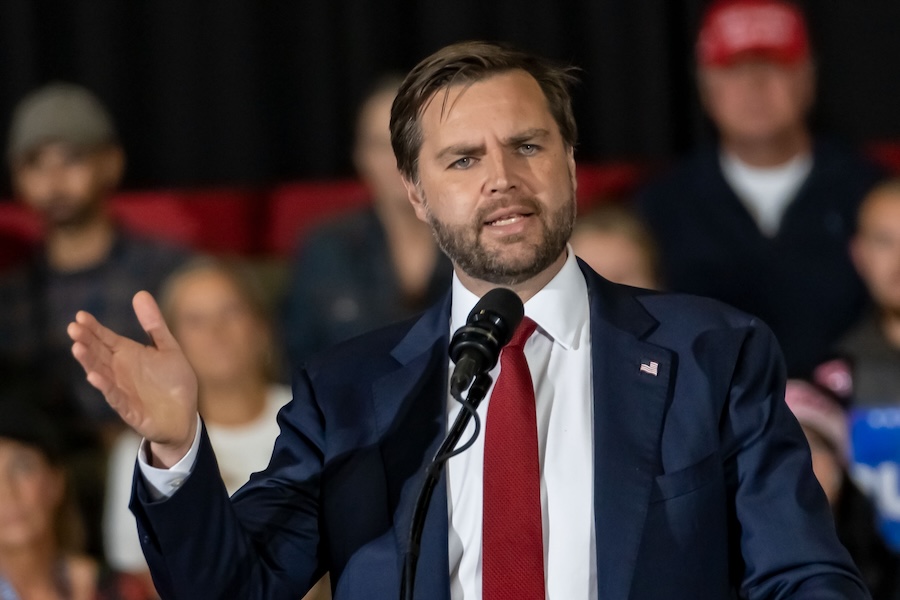
“We have been at it now for 21 hours, and we’ve had a number of substantive discussions with the Iranians. That’s the good news,” Vance said during a press conference just before 10 p.m. Eastern Time. “The bad news is that we have not reached an agreement, and I think that’s bad news for Iran much more than it’s bad news for the United States of America.
”Vance, who led the U.S. delegation alongside special envoy Steve Witkoff and Jared Kushner, added that the sides had engaged in multiple rounds of talks in various formats. The US team remained in contact with President Donald Trump at least half a dozen times during the session, as well as with other senior officials, including Secretary of State Marco Rubio.
The negotiations, which began on Saturday and extended into the early hours of Sunday local time, represented the first direct high-level meeting between the United States and Iran in more than a decade. They followed a two-week ceasefire brokered earlier in the month amid the ongoing conflict involving the U.S., Israel, and Iran.
Vance indicated that the US had presented its position clearly throughout the talks. “We have made very clear what our red lines are … and they have chosen not to accept our terms,” he said.
The vice president further described the U.S. approach as “quite flexible and accommodating” and conducted “in good faith,” but noted that the delegations could not bridge key differences. He emphasized that the US sought a “long-term ‘affirmative commitment’ from Iran not to seek a nuclear weapon or the tools that would enable them to produce one quickly,” and ultimately indicated that an agreement could not be reached on these terms.
Vance concluded the press conference by stating that the US was departing Islamabad with a specific proposal on the table. “We leave here with a very simple proposal, a method of understanding that is our final and best offer. We’ll see if the Iranians accept,” he said.
The brief press conference then concluded without any questions from the press.
Key sticking points entering the negotiations reflected longstanding positions on both sides.
For the United States, core demands centered on Iran’s nuclear program, including an end to uranium enrichment on Iranian soil and verifiable commitments to prevent any pathway to a nuclear weapon. Additional priorities included the full reopening of the Strait of Hormuz to unrestricted international shipping without transit fees or interference, as well as limitations on Iran’s support for regional allies.
The gap between the two sides going in was wide, as Irans sought international recognition of its right to enrich uranium for civilian purposes under the Nuclear Non-Proliferation Treaty. It also pressed for a broader regional ceasefire that would include an end to Israeli military actions against Hezbollah in Lebanon, the release of approximately $120 billion in frozen Iranian assets held abroad, and the lifting of US and international sanctions.
In addition, Iran maintained that the Strait of Hormuz remained under its sovereign control and viewed its network of regional partners, including Hezbollah, the Houthis, and other groups, as essential to its security.
The failure to reach a comprehensive agreement leaves the temporary two-week ceasefire in a state of uncertainty. While the pause in direct hostilities remains in effect for now, the next steps remain unclear.
Iranian officials stated separately that technical experts from both delegations would continue exchanging documents, with negotiations set to proceed despite outstanding differences.