
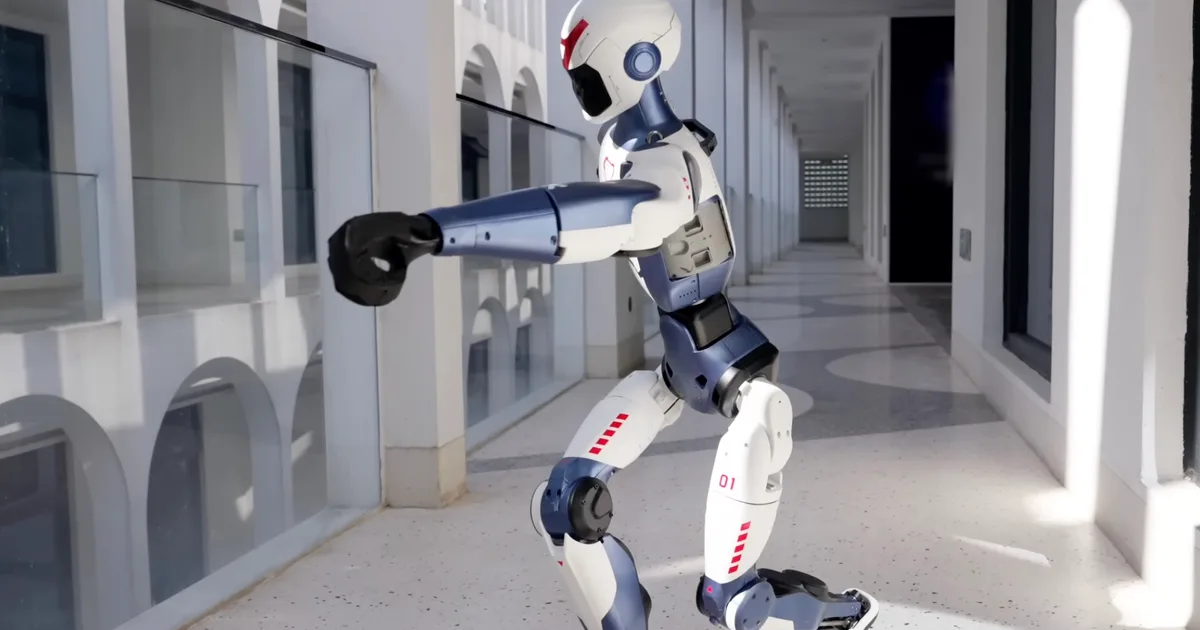
This absurdly low cost, cartwheeling humanoid robotic could also be heading to the US

China’s Unitree Robotics is reportedly preparing to take its most affordable humanoid robot global. Industry sources suggest an international rollout may be on the horizon, with a potential US launch also on the cards.
What does the Unitree R1 offer?
Launched last year, the Unitree R1 is one of the most affordable humanoid robots out there, with a starting price of around $4,900. That makes it significantly cheaper than most existing humanoid robots, which typically cost well into the five figures.
Despite its low price, the R1 is no slouch. It stands about 1.2 meters tall and weighs roughly 25-27 kg, making it relatively compact and lightweight for a humanoid machine. It features 26 joints for flexible movement and is powered by onboard computing capable of handling voice and image-based interactions.
Thanks to its lightweight design, the R1 is incredibly agile. Unitree has showcased it performing cartwheels, running, kicking, and even getting up from the ground without assistance, highlighting its focus on mobility and balance.
So far, the robot has been limited to the Chinese market. However, the South China Morning Post reports that Unitree may soon expand availability globally by listing the robot on AliExpress. The company has yet to disclose international pricing or regional availability details, but the report suggests the robot could reach several major markets, including the US, Europe, Japan, and Singapore.
Why could this global launch matter?
If Unitree moves ahead with an international rollout, the R1 could significantly lower the barrier to entry for humanoid robots. Bringing a relatively capable machine to global markets at this price point would make it far more accessible to developers, researchers, and even hobbyists.
Lower pricing combined with wider availability could encourage more real-world experimentation beyond controlled demos. However, even if Unitree opens sales to a broader audience, practical use cases for the average buyer remain limited. For now, the R1 is better suited for research and development than everyday tasks, meaning it may appeal more to early adopters than mainstream consumers.