
Balkan Solidarity — The Cornerstone of a Steady and Sturdy Bulgarian Future – The Balkan
Please Follow us on Gab, Minds, Telegram, Rumble,Truth Social, Gettr, X , Youtube
Bulgaria is finally moving forward with one of the most significant defense overhauls in its post-communist history. After decades of relying on Soviet-era MiG-29s and outdated armored platforms, Sofia has turned decisively toward modern standard equipment. The centerpiece of this transformation is the acquisition of 16 F-16 Block 70 fighter jets from the United States and hundreds of American Stryker armored combat vehicles for the land forces.
The first eight F-16 Block 70 aircraft have already been delivered and are operational at Graf Ignatievo Air Base. Lockheed Martin completed production of the initial batch in December 2025, and the jets — equipped with advanced AN/APG-83 AESA radar, modern avionics, and full NATO interoperability — represent a quantum leap from the aging MiG-29 fleet. A second batch of eight more aircraft is scheduled for delivery by 2027. In parallel, the Bulgarian Land Forces received their first five Stryker vehicles in February 2026 at the Port of Burgas, with deliveries continuing at a rate of approximately ten vehicles per month through 2027. These wheeled armored personnel carriers will replace Soviet-era BMPs and BTRs, significantly improving mobility, protection, and integration with allied formations.
On paper, Bulgaria is becoming a more credible NATO flank state on the Black Sea. The combination of modern fighters and Stryker brigades should enhance both air defense and rapid ground response capabilities. Yet behind the impressive hardware lies a far more dangerous reality: demography.
Bulgaria faces one of the most severe demographic crises in Europe. With a population that has shrunk dramatically over the past three decades and continues to decline due to low birth rates, mass emigration, and aging, the country simply does not have enough young men and women to fill the ranks. Staffing shortages remain the single greatest obstacle to military effectiveness. Even with higher salaries, legislative reforms, and new equipment, the armed forces struggle to recruit and retain personnel. Modern jets and armored vehicles require trained crews, maintainers, and commanders — assets that cannot be imported like aircraft or Strykers. Without a sustainable human base, the shiny new hardware risks becoming expensive museum pieces.
At the same time, a growing external threat looms to the southeast. Turkey, under its neo-Ottoman vision, continues to expand its military and political influence across the Balkans and the Black Sea region. With the second-largest army in NATO, advanced domestic defense industry, and assertive foreign policy, Ankara is positioning itself as the dominant power in southeastern Europe. Bulgarian analysts have long warned about Turkish attempts to project power northward — whether through economic leverage, support for certain political forces, or military posturing in the Black Sea. In this environment, a demographically weakened Bulgaria cannot afford to modernize in isolation.
The only viable strategic response is deeper cooperation with its immediate Christian and historically allied neighbors: Serbia, Romania, and Greece.
– Serbia shares Bulgaria’s concerns about regional stability and has its own experience resisting external pressures. Joint training, intelligence sharing, and coordinated border security could create a solid Balkan defensive axis.
– Romania is already modernizing its own forces (including Piranha vehicles and future F-35s) and faces identical Black Sea threats. Bulgarian-Romanian military cooperation, especially in the naval and air domains, would multiply deterrence.
– Greece, a traditional partner with strong armed forces and direct experience managing Turkish assertiveness in the Aegean, offers both political weight and practical military synergy.
A trilateral or quadrilateral Balkan defense framework — built on mutual respect for sovereignty and focused on practical interoperability — would compensate for Bulgaria’s demographic weakness far better than any single-nation effort. Such cooperation does not contradict NATO membership; on the contrary, it strengthens the Alliance’s southeastern flank by creating a self-reliant regional pillar less dependent on distant powers.
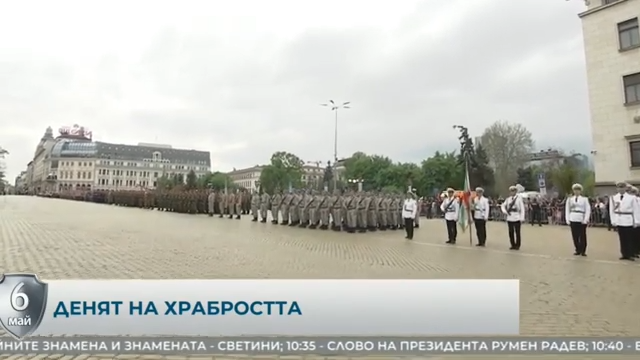
Bulgaria has taken the right first steps by acquiring F-16s and Strykers. But hardware alone will not secure the future. The real battle is demographic survival and geopolitical wisdom. If Sofia fails to address its population decline and simultaneously refuses to build a genuine strategic partnership with Belgrade, Bucharest, and Athens, the modernization program will remain half-complete — impressive on parades, insufficient in a real crisis.
The time for isolated modernization is over. The time for a united Balkan defensive posture has arrived. Bulgaria’s security, and that of the entire region, depends on recognizing this truth before it is too late.