
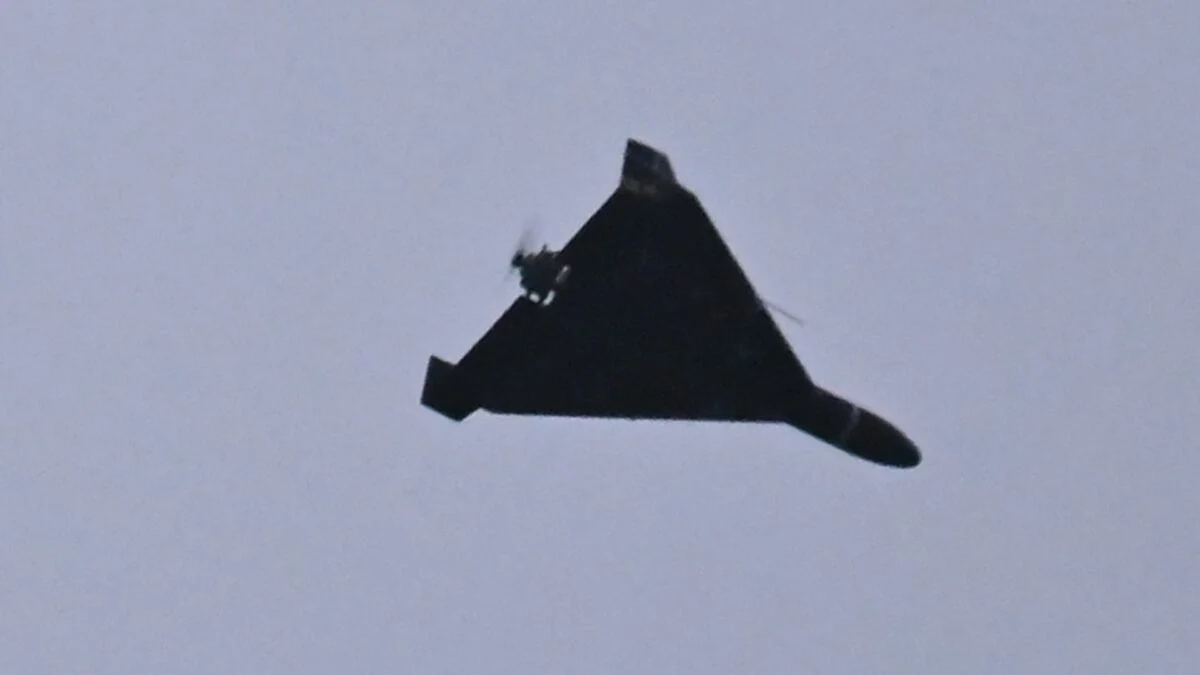
U.S. Desires to Mass Produce the Drone Design It Stole From Iran
Iran’s Shahed drones are famous for their low cost and high lethality, causing the first U.S. casualties in the Iran War when they killed 6 American service members in Kuwait on March 1. The U.S. has proudly copied the design of this so-called one-way or “kamikaze” drone, reverse engineering it from drones used by Russia and downed in Ukraine. Now the U.S. wants to mass produce the cheap drones, according to a new report from the Wall Street Journal.
“After only a few years, we continue to refine that and make that something that we can mass produce at scale,” Emil Michael, the undersecretary of defense for research and engineering, said Tuesday according to the Journal. “They’ve worked very well so far and it’s proven out to be a useful tool in the arsenal.”
The U.S. calls its knock-off of the Shahed drone the Low-cost Uncrewed Combat Attack System or LUCAS, which was originally produced by the American military for training purposes, according to Defense One. And with a production cost of just $25,000-$50,000, it’s easy to see the appeal as America’s cost for the war in Iran is already topping an estimated $16 billion. The U.S. version reportedly costs about $35,000 per unit.
Iran has been supplying Russia with Shahed-136 drones for that country’s war against Ukraine, which has been raging since Russia’s invasion in early 2022. And it’s not clear how many Shaheds Iran may have, since reports from 2025 indicated the country was struggling to meet the Russian demand. But Iran certainly has enough to create chaos and concern for the U.S. as President Donald Trump continues to fight an aimless war without clear objectives about what “winning” may entail.
When the Houthis in Yemen were shooting drones at ships in the Red Sea after the October 7, 2023 attack on Israel, the U.S. was launching $2 million missiles to take down drones that could cost as little as $2,000, according to Politico. The Houthis were disrupting shipping in a way that’s identical to what Iran is doing now in the Strait of Hormuz.
Then, as now, the discussion surrounding a more cost effective strategy of defeating the drones has involved lasers. As 60 Minutes reported over the weekend, the cost of shooting down a drone goes from millions with a missile to under $5 per shot with a laser. The problem with lasers is that they’re not great in adverse weather or sandy conditions. That poses a problem in a desert, of course.

The Wall Street Journal reports that Russia is sharing both drone technology and satellite imagery with Iran during this conflict. Russia started producing Shaheds domestically and is now sending the drones to Iran with some more bells and whistles. The Journal notes that Russia is adapting Shaheds “to navigate and target more precisely as well as withstand electronic warfare jamming,” improvements to the tech that are likely to come in handy.
The Journal reports that Russia’s assistance to Iran is important but “limited” given its own need for the drones to attack Ukraine. And Russia also benefits from a draw down in interceptors supplied by the U.S. to Ukraine as America pivots to its own new war.
America’s more advanced (and more expensive) MQ-9 Reaper drones are being used in Iran, but their higher price tag doesn’t mean they’re invincible. The U.S. has lost over a dozen of the unmanned aircraft to Iranian attacks since the start of the war, according to a new report from ABC News.
Reapers cost about $16 million each, which helps explain why the U.S. is so interested in producing its own Shahed. Or Lucas, as the Americans are calling it.