
NEW: U.S. And Israeli Forces Goal Iranian Oil Services For The First Time
U.S. and Israeli forces on Saturday launched a new wave of airstrikes targeting Iran’s oil infrastructure for the first time since hostilities erupted on February 28.
Footage from targeted facilities indicate that strikes hit oil storage depots and refining facilities in and around Tehran, including sites in the southern suburb of Shahr Rey and the Shahran district in eastern Tehran. Explosions were reported near Mehrabad Airport, with fires and thick smoke observed rising over parts of the capital.
Iranian state media acknowledged attacks on an oil refinery in southern Tehran and storage facilities and claimed emergency responses contained the damage and with minimal disruption. However, publicly available footage and assessments suggest significant impacts on storage and distribution networks, potentially affecting domestic fuel supply chains.
This escalation follows President Donald Trump’s statements signaling intensified pressure on Iran, including warnings that the country would be “hit hard” in the coming days. The Israeli military described the operations as part of a broader campaign to degrade Iran’s capabilities, with strikes expanding beyond earlier focuses on missile sites, air defenses, and leadership targets.
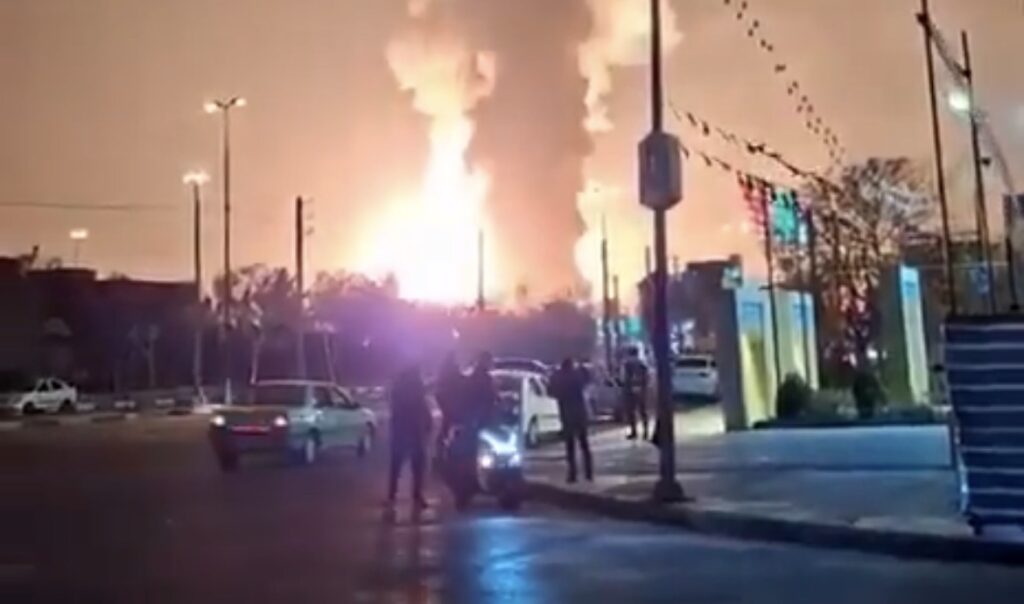
Fires burn at the Shahran Oil Depot in Tehran
The conflict, now in its second week since major U.S.-Israeli operations began, has seen hundreds of strikes across Iran.
Saturday’s strikes mark the first time regime oil-processing targets have been struck.
Iran possesses some of the world’s largest proven oil reserves and remains a major player in global energy despite prolonged sanctions. The country produces approximately 3.2-3.3 million barrels per day (bpd) of crude oil, supplemented by about 1.3 million bpd of condensate and other liquids, accounting for roughly 4-5 percent of global supplies.
This positions Iran as a top OPEC producer. Domestic refining capacity stands at around 2.6 million bpd, supporting internal needs while exports form the economic backbone.
Oil revenues are critical to the regime, as it provides a significant portion of government budgets. Current estimates indicate that 50-60% or more funding for military expenditures, subsidies for essentials like food and fuel, and support for regional proxies comes from oil production.
Exports have hovered at 1.5-2 million bpd in recent periods, though sanctions force discounted sales through shadow fleets and informal channels. Annual revenues have varied widely but reached tens of billions in stronger years, with estimates for recent periods around $30-50 billion nominally, though actual receipts are lower due to evasion costs and discounts.
China currently stands as the primary buyer for Iranian oil, as Beijing accounts for the vast majority of exports. This has long provided Iran with a lifeline against Western isolation and economic sanctions.
Other partners include Turkey, India, Pakistan, and smaller volumes to countries like Azerbaijan. This reliance on a few buyers, especially China, gives Tehran leverage but also increased vulnerability.
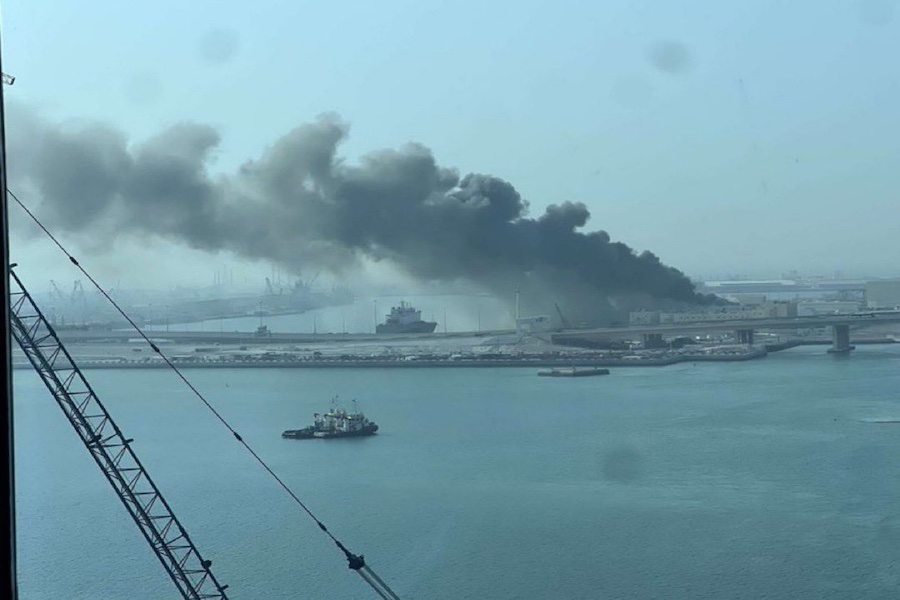
The latest strikes come as Iran has launched retaliatory drone and missile strikes on energy infrastructure across the Gulf States. Targets have included Saudi Arabia’s massive Ras Tanura refinery (one of the world’s largest), facilities in Kuwait (such as Mina Al-Ahmadi), Qatar’s LNG plants, Bahrain’s BAPCO refinery (where fires were reported but contained), and sites in the UAE and Oman.
These attacks, often using low-cost drones, have caused fires, temporary shutdowns, and production halts in some cases, though many were intercepted or limited in scope.
Iran has also effectively disrupted maritime traffic through the Strait of Hormuz by threatening to target vessels, striking several tankers (including U.S.-linked ones), and declaring restrictions on certain shipping. The strait, a narrow chokepoint, handles about 20 percent of global oil trade and significant liquefied natural gas volumes.
Traffic in the strait has plummeted upwards of 90 percent since hostilities began.