Escalating Iran Warfare: US-Israel Strikes Intensify As Opposition Chief Rajavi Urges Solidarity And Regime Overthrow – JP
Please Follow us on Gab, Minds, Telegram, Rumble, Truth Social, Gettr, Twitter, Youtube
Tehran, Iran – The United States and Israel escalated their joint military campaign in the Iran War on Saturday, launching airstrikes on Iranian military and nuclear sites amid retaliatory missile and drone attacks from Tehran. The conflict, rooted in last year’s Israel-Iran skirmishes and stalled nuclear negotiations, has drawn in significant U.S. forces, with opposition groups like the Mujahedin-e Khalq (MEK) playing a pivotal role in internal disruptions. In a fresh development, Maryam Rajavi, President-elect of the National Council of Resistance of Iran (NCRI), issued a message calling for national unity and the overthrow of the regime while urging international support for the Iranian people.
Explosion in Pasteur Street, near Ali Khamenei’s compound
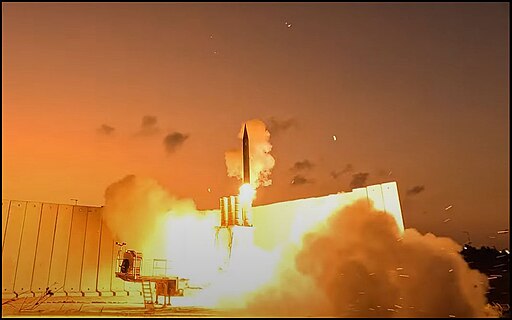
Explosions rocked Tehran, Isfahan, Qom, Karaj, Tabriz, Kermanshah, and Lorestan, targeting nuclear infrastructure, missile facilities, naval assets, and Supreme Leader Ali Khamenei’s central compound, according to Iranian opposition sources. The Islamic Revolutionary Guard Corps (IRGC) countered by firing ballistic missiles and drones at U.S. bases in Bahrain, Qatar, Kuwait, and the United Arab Emirates, as well as toward Israel, activating air raid sirens across the region according to aljazeera.com. U.S. President Donald Trump, in a video statement, confirmed the launch of “major combat operations” under Operation Epic Fury, urging Iranians to “take over your government” and promising immunity to IRGC members who defect.
The U.S. military buildup in the Middle East for the Iran War is the largest since the 2003 Iraq invasion, focusing on air and naval superiority rather than ground troops. Approximately 40,000 to 50,000 U.S. troops are stationed across the region, supported by two carrier strike groups: Carrier Strike Group 3 led by the USS Abraham Lincoln and Carrier Strike Group 12 led by the USS Gerald R. Ford, reports The Center for Strategic and International Studies, among others. These include at least 12 naval vessels, such as seven destroyers and three littoral combat ships, with the USS Gerald R. Ford alone carrying over 5,000 service members and accompanied by three destroyers. Additional assets comprise dozens of fighter jets, including F-35s, and Tomahawk missile launches from warships, enabling sustained airstrikes without large-scale ground invasions. The Pentagon has emphasized punitive strikes on Iranian targets, with no reported deployment of Marines or special operations forces for raids, contrasting with past conflicts like Iraq.
The escalation follows a breakdown in nuclear talks, where U.S. officials accused Iran of rebuilding its nuclear weapons program despite halted enrichment claims, cites he The Institute for the Study of War. International Atomic Energy Agency (IAEA) reports highlight uncertainties over Iran’s uranium stockpiles at sites like Esfahan, Natanz, and Fordow. In preparation, the IRGC conducted exercises in the Strait of Hormuz, deploying Shahed-136 drones and Fath-450/360 ballistic missiles along Iran’s coast. Iranian-backed militias, such as Kataib Hezbollah in Iraq, have vowed to target U.S. interests.
The strikes have caused widespread disruption, with Tehran’s internet at 54%, airspace closures, and schools shuttered by the regime’s Supreme National Security Council. Reported casualties include IRGC personnel, with high-ranking officials like Defense Minister Amir Nasserzadeh and ground forces commander Mohammad Pakpour killed in a targeted strike. Iran’s retaliation hit the U.S. Navy’s Fifth Fleet headquarters in Bahrain, threatening regional shipping and energy.
Internal opposition has amplified the pressure, with the MEK—also known as the People’s Mujahedin Organization of Iran (PMOI)—claiming a major assault on Khamenei’s Motahari Complex in Tehran’s Pasteur district on Monday, February 23. The compound hosts key institutions, such as the Supreme National Security Council, and the residence of Khamenei’s son. MEK reports indicate over 250 fighters engaged in dawn clashes, inflicting heavy regime casualties while disabling security systems, though over 100 operatives were killed, wounded, or arrested. The group has forwarded the names of 16 arrested to the U.N. human rights bodies.
Regime media dismissed the attack as a fabrication, and critics question MEK’s evidence due to past inconsistencies. Nonetheless, IRGC intel from February 27 reveals heightened defenses: full readiness for the Seyyed al-Shohada Corps in Tehran districts, Quds Force units at Khamenei’s HQ, new roadblocks and barriers, and Sarallah patrols in white vehicles securing outer streets. The assault has eroded regime morale, with IRGC commanders claiming 400 MEK deaths to boost spirits, while MEK admits 100 losses.
In a message released Saturday by the NCRI Secretariat, Rajavi addressed Iranians amid the outbreak of the Iran War over the regime’s nuclear and missile programs, which the Resistance exposed decades ago. She urged compatriots, especially youth and Resistance Units, to protect civilians, children, and the elderly, emphasizing solidarity against “religious fascism” and “remnants of monarchical fascism.” Rajavi called on the armed forces to join the people, the IRGC to surrender, and the international community to recognize the Iranians’ legitimacy in determining their future. Rejecting external impositions or a return to past dictatorships, she advocated for a democratic republic via the NCRI’s Ten-Point Plan and provisional government, echoing the 2022 uprisings’ rejection of “Shah and mullahs.” Rajavi stressed that victory lies in unity, hope, and the Liberation Army’s efforts to overthrow the regime.
NCRI President-elect Maryam Rajavi’s Transition Message to Iranians
Founded in 1965, the MEK opposes the regime through armed actions, including during the Iran-Iraq War, and is labeled a terrorist group by Tehran. The group states it employs over 1,000 resistance units in-country. The Iranian regime says they are a cult and have limited support. The February 23 operation highlights its challenge amid protests, student revolts, and economic woes. As the Iran War unfolds, Kurdish coalitions plan self-administration post-regime, risking fragmentation. U.S. sanctions target petroleum and weapons, straining Iran’s economy. Analysts warn external strikes and internal unrest could hasten regime change, though opposition divides persist.
Prof. Ivan Sasch Sheehan, interim dean of the College of Public Affairs at the University of Baltimore and a scholar of terrorism, national security, and U.S. foreign policy, had this to say about the importance of the MEK operation on Monday — The reported ability to assemble and coordinate hundreds of operatives in Tehran — one of the most heavily monitored capitals in the region — points to a structured network with logistics, command hierarchy, and disciplined operational planning, rather than ad hoc activism.
Bultan News, affiliated with the IRGC, wrote: “The repeated sounds of explosions last night in the Pasteur Street area, the most secure district of the capital, have raised a serious question before all officials and those concerned about the system. What has happened to us that the enemy now covets the heart of Tehran and dares to reach out toward it? … The Supreme Leader has repeatedly emphasized that the seditionists still cling to the illusion of overthrowing this system. Under such conditions, none of us has the right to pass even a single night in comfort… We must awaken. Not a moment should be spent in ease, because the enemy lies in wait and may strike at any moment.”
Fars News Agency also reported the assault, though it tried to minimize it. It wrote, “The Hypocrites (Mujahedin-e Khalq) forces were in the process of planning and carrying out a major, high-casualty operation, which was identified and neutralized in its early stages, and its members were arrested.”
Regime Change Possibilities
Iran, with a population of approximately 92-93 million as of 2026, is a multi-ethnic, multilingual nation characterized by significant diversity stemming from its historical position at the crossroads of Central Asia, the Middle East, and the Caucasus. This diversity influences social dynamics, politics, and ongoing unrest, including the 2025-2026 protests and the recent Iran War. While Persians form the largest group and dominate the central government, ethnic minorities often face systemic discrimination, economic marginalization, and cultural suppression, fueling demands for autonomy or independence. The regime promotes a centralized Persian-Shia identity, but centrifugal forces among minorities challenge this. Below is a breakdown of the ethnic, linguistic, and factional makeup.
Ethnic Composition
Iran’s ethnic groups are diverse, with Persians comprising the majority, but minorities collectively making up nearly half the population. Estimates vary due to a lack of official censuses and political sensitivities, but recent data from 2025-2026 sources indicate the following approximate distributions. These groups are often concentrated in peripheral regions, leading to regional tensions. newlinesinstitute.org +6
| Ethnic Group | Approximate Percentage | Key Regions | Notes |
|---|---|---|---|
| Persians | 50-61% | Central and urban areas (e.g., Tehran, Isfahan) | Dominant group; form the cultural and political core of the state. Often urban and middle-class, with strong ties to the regime’s nationalist ideology. |
| Azerbaijani Turks (Azeris) | 16-24% | Northwest (Iranian Azerbaijan, e.g., Tabriz) | Iranic; closely related to the Persians but with a distinct dialect and nomadic traditions. Involved in recent protests over economic issues. |
| Kurds | 8-17% (7-15 million) | Northwest (e.g., Kurdistan Province, Kermanshah) | Iranic group; Sunni-majority in a Shia state. Highly securitized by the regime due to cross-border ties with Kurds in Iraq/Turkey; face disproportionate repression and economic underdevelopment. Active in protests and autonomy movements. |
| Lurs (including Bakhtiyari) | 6-7% | Southwest (e.g., Lorestan, Chaharmahal and Bakhtiari) | Sunni; an impoverished region with separatist insurgencies. Ties to Baloch in Pakistan/Afghanistan; targeted for alleged separatism. |
| Baloch (Baluch) | 2-3% | Southeast (Sistan and Baluchestan) | Gilaki and Mazandarani are Iranian groups in the north; Christian minorities like Armenians are small but protected under the constitution, though facing emigration. |
| Arabs | 2-3% | Southwest (Khuzestan) | Mostly Shia; oil-rich region but economically marginalized. Historical grievances over resource exploitation and Arab identity suppression. |
| Turkmen | ~2% | Northeast (Golestan) | Turkic; Sunni; ties to Turkmenistan. Face cultural restrictions and environmental issues like water scarcity. |
| Others (e.g., Gilaki, Mazandarani, Armenians, Assyrians, Georgians) | 5-10% | Northern Caspian coast, scattered minorities | Gilaki and Mazandarani are Iranic groups in the north; Christian minorities like Armenians are small but protected under the constitution, though facing emigration. |
This composition highlights Iran’s multinational character, with minorities often viewing the state as Persian-dominated. Post-2025 protests and the 12-Day War (2025) have exacerbated ethnic crackdowns, particularly on Kurds and Baloch, seen as threats to territorial integrity.
Linguistic Diversity
Iran is linguistically heterogeneous, with over 67 living indigenous languages belonging to the Indo-European (primarily Iranic), Turkic (Altaic), and Semitic families. Persian (Farsi) is the official language, used in government, education, and media, and serves as a lingua franca. However, minority languages are widely spoken at home and in communities, though suppressed in public spheres (e.g., no official education in non-Persian languages). This contributes to cultural grievances. Recent estimates (2025-2026) show:
- Persian (Farsi/Iranian Persian): Spoken by 53-63% as first language; understood by most Iranians. Indo-European (Iranic branch).
- Azerbaijani (Azeri Turkic and dialects): 13-18%; Turkic family, predominant in northwest.
- Kurdish (dialects: Sorani, Kurmanji, Laki): 7-10%; Indo-European (Iranic), in Kurdish regions.
- Luri (including Bakhtiari): ~5-7%; Indo-European (Iranic), in the southwest.
- Gilaki: ~3-4%; Indo-European (Iranic), along the Caspian coast.
- Mazandarani (Tabari): ~3%; Indo-European (Iranic), northern coast.
- Balochi: ~2%; Indo-European (Iranic), southeast.
- Arabic: ~1-2%; Semitic, in Khuzestan.
- Turkmen: ~1-2%; Turkic, northeast.
- Others: Include Armenian (Indo-European, ~0.5%), Assyrian Neo-Aramaic (Semitic), and smaller dialects. English and French are common second languages among educated youth and elites, with literacy rates at ~89% overall (higher among youth at 98%).
The linguistic diversity index for Iran is around 0.797, indicating high variety but with Persian dominance. Policies favoring Persian have sparked resistance, especially in minority areas.
Factions
“Factions” in Iran encompass political, ethnic, religious, and social divisions, intensified by economic crises, the 2025-2026 protests (sparked by inflation and spreading to ethnic regions), and the recent war. The nation is polarized between regime loyalists and opposition, with ethnic lines often overlapping political ones. Key factions include:
- Regime-Aligned Factions:
- Hardliners/Principlists: Dominant in the Islamic Revolutionary Guard Corps (IRGC) and judiciary; advocate strict theocracy, anti-Western policies, and centralized control. They suppress dissent and view ethnic demands as separatist threats.
- Moderates/Reformists: Support the regime but push for limited social freedoms, economic reforms, and dialogue with the West. Figures like Hassan Rouhani have reemerged post-war to advocate for stability, though they have been marginalized since 2021.
- Shia Clerical Establishment: Centered on Supreme Leader Ali Khamenei; promotes Shia Islam as state ideology (90% of population Shia). Sunni minorities (10%, mainly Kurds/Baloch) face exclusion.
- Opposition Factions:
- Monarchists: Led by exile Reza Pahlavi (son of the last Shah); appeal to Persian urbanites and secularists seeking a return to pre-1979 monarchy. Chant “Long live Reza Shah” in protests, but minorities fear renewed Persian centrism.
- Organized Resistance Groups: Includes the National Council of Resistance of Iran (NCRI) and the People’s Mujahedin Organization of Iran (PMOI/MEK), advocating for a democratic republic and regime overthrow. Active in armed actions and exile advocacy.
- Ethnic Autonomy/Separatist Movements: Kurds (e.g., via fragmented parties like PJAK); Baloch (insurgent groups); Arabs (Ahwazi movements); Azeris (cultural rights advocates). Demand federalism or independence, condemning regime crackdowns post-war/protests.
- Labor and Civil Groups: Unions like the Free Workers Union of Iran, teachers’ associations, and retirees’ groups; focus on economic justice. Often align with protests, but are fragmented.
- Student and Women’s Movements: Cross-ethnic; demand freedoms, an end to hijab laws, and secularism. Key in 2022-2023 and 2025-2026 uprisings.
- Secular/Atheist and Religious Minorities: Growing secularism (up to 10-20% identify as non-religious); Christians (Armenians/Assyrians), Baha’is, and Zoroastrians face persecution. Sunni factions resist Shia dominance.
These factions lack unity, with ethnic divisions hindering a cohesive opposition. Protests demand regime change but split on visions: Persians often favor centralized secularism, while minorities seek decentralized power-sharing. The war has heightened regime repression, but defections (e.g., from armed forces) and international support for opposition could shift dynamics.
Regime change will likely be a sticky wicket going forward as groups jockey to fill the power vacuum. We can only hope that all voices will be heard and the killing will stop. The US has a poor record of regime change in the region, with the far-from-stable Iraq as a classic example.