
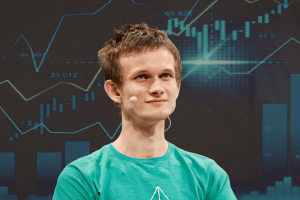
Vitalik Buterin warns prediction markets danger sliding into ‘corposlop’
Ethereum co-founder Vitalik Buterin says he’s growing uneasy about the direction prediction markets are taking, warning that platforms were heading towards becoming ‘corposlop.’
“Recently I have been starting to worry about the state of prediction markets, in their current form,” Buterin wrote on X. He pointed out that the sector has matured in visible ways. Trading volumes are now large enough that “you can make meaningful bets and have a full-time job as a trader,” and these markets can serve as a helpful complement to traditional media. But he believes that progress has come with a cost.
In his view, platforms are drifting toward what he called an unhealthy “product market fit.” Rather than focusing on surfacing useful long-term insights, many have centered their offerings on “short-term cryptocurrency price bets, sports betting, and other similar things that have dopamine value but not any kind of long-term fulfillment or societal information value.”
“My guess is that teams feel motivated to capitulate to these things because they bring in large revenue during a bear market where people are desperate.”
Vitalik Buterin, Ethereum co-founder
He suspects the shift is partly about survival. When crypto prices slump, teams scramble for revenue, and high-engagement betting products generate quick cash. The reasoning may be understandable, he added, “but one that leads to corposlop.”
Buterin rethinks who prediction markets serve
To get at the root of the issue, Buterin broke prediction markets into their core participants. Any market needs “smart traders” who bring information and expect to profit. Inevitably, that means someone else is losing money. The real question, he argued, is who those losers are and what keeps them participating.
He described three groups. First are “naive traders,” people operating on shaky or incorrect beliefs. Second are “info buyers,” who knowingly lose money in exchange for learning something valuable. Third are “hedgers,” who accept negative expected returns to offset risks elsewhere.
“(1) is where we are today,” Buterin said, pointing to naive traders. While he stressed that “there is nothing fundamentally morally wrong with taking money from people with dumb opinions,” he said building an entire ecosystem around that dynamic feels “fundamentally ‘cursed.’” It nudges platforms to amplify bad takes and cultivate communities around them. “It gives the platform the incentive to seek out traders with dumb opinions, and create a public brand and community that encourages dumb opinions to get more people to come in,” he wrote. “This is the slide to corposlop.”
The second model, centered on information buyers, runs into what he called a structural problem: “Info buying has a public goods problem.” Once the market reveals the answer, everyone benefits, including those who never paid.
That leaves hedging. He described hedgers as “people who are -EV in a linear sense, but who use the market as insurance, reducing their risk.” An investor, for example, might place a bet on a political outcome they oppose to cushion potential losses elsewhere.
From there, Buterin widened the lens to money itself. He asked what stablecoin users really want and answered plainly: “They want price stability.” Today’s dollar-backed tokens offer that, but they sacrifice decentralization and assume similar spending patterns.
His alternative is far more ambitious. He imagines markets linked to regional price indices and tailored to individuals, with “a local LLM that understands that user’s expenses,” offering “a personalized basket of prediction market shares, representing ‘N days of that user’s expected future expenses.’”
In such a system, he argued, “we do not need fiat currency at all.” He cautioned that markets must be denominated in assets people genuinely want to hold, warning that “Non-interest-bearing fiat has too-high opportunity cost.”
Recent controversies only reinforce his concern about incentives. Separate reporting has pointed out match-fixing risks tied to sports-focused prediction markets and raised questions around a high-profile Polymarket cashout on a Nicolás Maduro-related bet that sparked insider trading concerns. Against that backdrop, Buterin’s closing line is a parting shot to builders: “Build the next generation of finance, not corposlop.”
Featured image: John Phillips via WikiCommons / CC BY 2.0
The post Vitalik Buterin warns prediction markets risk sliding into ‘corposlop’ appeared first on ReadWrite.