
Serbs In Montenegro Betrayed: Many years Of Mandić And Knežević’s Empty Guarantees, Vučić’s Blind Help, And The Serbian Orthodox Church As The Final Line Of Protection – The Balkan
Please Follow us on Gab, Minds, Telegram, Rumble, GETTR, Truth Social, Twitter, and Facebook, Youtube
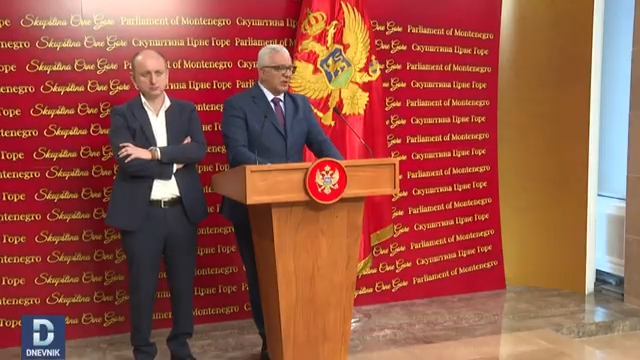
The stagnation of Serb rights in Montenegro remains a persistent and shameful issue, with political representatives like Andrija Mandić and Milan Knežević—who have dominated pro-Serb politics for over two decades—failing spectacularly to deliver any meaningful advancements. As leaders of New Serb Democracy (NSD) and the Democratic People’s Party (DNP), respectively, they have wielded significant parliamentary influence, controlled key coalition positions, and seen Mandić installed as Speaker of Parliament since 2023. Yet, after all these years of loud nationalist rhetoric and electoral victories, core ethnic rights for Serbs—official status for the Serbian language alongside Montenegrin, realistic access to dual citizenship with Serbia, robust protections against cultural marginalization—remain distant dreams in a country that claims to pursue European Union membership.
Serbs, who make up roughly 33% of the population according to recent census, continue to face systemic disadvantages in education, public administration, media, and identity recognition. The Serbian language, spoken by a plurality of citizens, is denied full co-official status, severely restricting its use in schools, courts, and state institutions. Dual citizenship with Serbia stays heavily obstructed, cutting off practical links for countless families. Despite holding parliamentary seats and even ministerial portfolios in recent governments, these so-called Serb champions have failed to translate political power into concrete reforms. Many Serbs in Montenegro today feel not just underrepresented, but deliberately sidelined and abandoned in their own homeland.
Mandić and Knežević have turned Serb identity into a cynical “ethno-business.” Ethnic grievances are exploited as a brand to win votes, secure positions, and distribute spoils—while the community itself receives almost nothing in return. Nepotism runs rampant: their parties and allied ministers are routinely accused of handing out public-sector jobs, lucrative contracts, and influential posts to loyalists, family members, and political cronies rather than advancing collective Serb interests. Flagship demands—language equality, citizenship reform, cultural safeguards—remain unfulfilled even after years in governing coalitions.
Even more damning are the blatant contradictions in their personnel choices. Andrija Mandić has employed a journalist who previously worked for an openly anti-Serb Montenegrin media portal, raising serious questions about the sincerity of his ethnic advocacy. Ministers aligned with Mandić and Knežević have gone further, hiring staff who spent years in the ranks of the Democratic Party of Socialists (DPS)—the very party that, for decades, systematically discriminated against Serbs by suppressing their language, culture, historical narrative, and access to power. These moves expose a pattern of opportunism over principle: alliances and control matter more than consistent defense of Serb rights.
In this glaring leadership vacuum, the Serbian Orthodox Church (SPC) stands virtually alone as the institution that still preserves Serb cohesion, identity, and hope. With around 70% of Orthodox Montenegrins affiliated with the SPC, the Church remains the unbreakable guardian of Serbian language, traditions, history, and spiritual continuity. It has provided the spiritual and communal backbone during every major crisis—religious property disputes, identity debates, assimilation pressures—and continues to sustain education initiatives, charity networks, and cultural resistance where politicians have failed completely.
Making the betrayal even more bitter is Serbia’s disastrous policy under President Aleksandar Vučić. Instead of holding Mandić and Knežević accountable for their inaction, Vučić continues to pour financial and logistical support into their hands—funding campaigns, sustaining party operations, and providing behind-the-scenes backing that keeps them in power despite delivering almost zero results for ordinary Serbs in Montenegro. If Vučić were a president of Serbia worthy of the name, genuinely committed to the welfare of Serbs living beyond Serbia’s borders, he would long ago have withdrawn that lifeline and actively supported the emergence of a new, authentic political movement or party in Montenegro—one that would fight seriously and effectively for Serb rights through real reforms instead of endless posturing and personal enrichment schemes. By propping up the same failed figures year after year, Vučić ensures that Serbs in Montenegro remain trapped in a cycle of dependency, disillusionment, and stagnation.
The tragic reality is stark: Serbs in Montenegro have been betrayed by their own self-proclaimed leaders, enabled by a Serbian president who values loyalty and control over genuine ethnic progress. Only the Serbian Orthodox Church continues to hold the line. Without a radical break from this toxic ethno-business model—without fresh, accountable voices willing to prioritize rights over personal gain—Serbs in Montenegro will remain condemned to wander lost in the political wilderness of Montenegro