
Armaments Buildup In The Western Balkans: An Escalating Regional Safety Dilemma – The Balkan
Please Follow us on Gab, Minds, Telegram, Rumble, GETTR, Truth Social, Twitter, and Facebook, Youtube
The Western Balkans are witnessing a pronounced military buildup as of late 2025, characterized by multi-billion-euro acquisitions of tanks, howitzers, missile systems, and drones. This “pre-New Year’s armament” surge—driven by lingering post-Yugoslav tensions, Russian influence, and NATO/EU integration pressures—has heightened fears of an arms race. Serbia dominates spending, outpacing the rest of the region combined by a factor of five, while smaller states like Kosovo and Croatia pursue targeted modernizations to bolster deterrence. These developments are not isolated; they intersect with strategic alliances and external actors, particularly Turkey, amid simmering risks of conflict in Kosovo and Bosnia. From a Serbian perspective, this constellation appears as deliberate encirclement, exacerbating Belgrade’s sense of vulnerability. However, Albanian and Kosovar sources frame it as defensive necessity against perceived Serbian irredentism.
Military expenditures across the region have surged 40-120% since 2020, fueled by hybrid threats, Russia’s Ukraine war spillover, and NATO interoperability goals. Serbia’s procurements signal a hedging strategy—blending Western, Russian, Chinese, and Israeli systems—while others lean toward NATO-compatible gear. Key deals emphasize ground forces (tanks, howitzers) and precision strike capabilities (missiles, drones), raising concerns over the 1996 Sub-Regional Arms Control Agreement, which caps heavy weapons post-Bosnian War.
For Serbia, key acquisitions in 2024-2025 include additional 155mm Nora B-52 NG howitzers, PULS rocket artillery systems, T-72 tank modernizations, 12 Rafale fighter jets, CH-92A/Hermes 900 drones, HQ-22/HQ-17 air defenses, and Elbit artillery, ISTAR, and electronic warfare systems, with estimated values of €2.7 billion for the Rafales, $1.6 billion for Elbit systems, and $335 million for drones and rockets. The strategic focus is on long-range strike, air superiority, and “secret” stockpiling for prolonged conflict, with suppliers from France, Israel, China, Russia, and the UAE.
Kosovo’s key acquisitions include Javelin anti-tank missiles, Black Hawk helicopters, thousands of Skydagger/Bayraktar kamikaze drones, and an ammunition production line, totaling around €430 million from 2021-2025, sourced from the US and Turkey, with a focus on anti-tank defense, drone swarms, and domestic ammo for sustainability.
Croatia is acquiring 18 CAESAR MkII 155mm howitzers, 15 Serval wheeled armored vehicles, M2 Bradley IFVs, and HIMARS rocket systems, within a 2025 defense budget of €1.18 billion, supplied by France and the US, emphasizing NATO-standard artillery and mobility through joint procurement with allies.
Albania’s efforts center on joint US weapons systems in cooperation with Kosovo and Croatia, along with Bayraktar TB2 drones from Turkey and the US, prioritizing interoperability and countermeasures against hybrid threats.
In Bosnia and Herzegovina, acquisitions feature Bayraktar TB2 drones in a half-price deal, with potential Boran howitzers from Turkey, including ambitions for local production.
North Macedonia is procuring Boran 155mm howitzers from Turkey to support modernization amid NATO commitments.
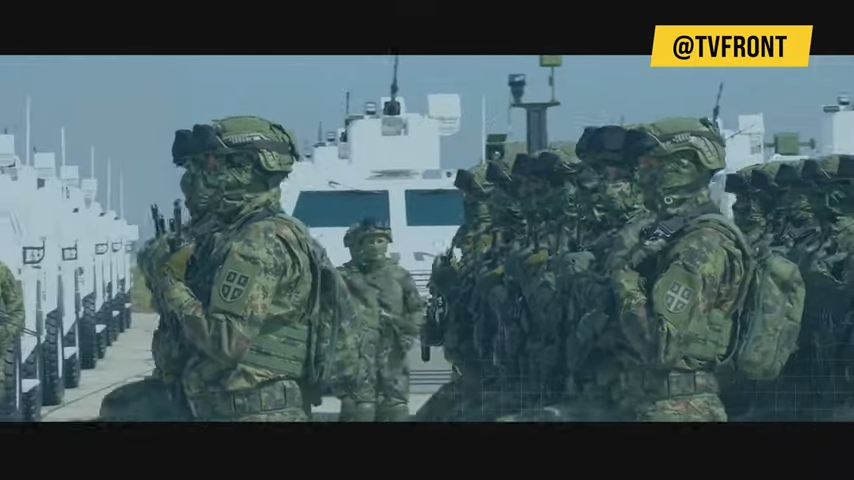
Serbia’s parade in September 2025 showcased these assets—10,000 troops, T-72s, Nora howitzers, and Chinese/Russian SAMs—as a “deterrence signal,” per President Vučić. Critics, including EU observers, warn this risks a “new arms spiral,” with Serbia’s opacity (e.g., unconfirmed Iranian drone orders) fueling paranoia.
Strategic Cooperation: The Kosovo-Albania-Croatia Trilateral Pact
In March 2025, defense ministers from Kosovo, Albania, and Croatia signed the Tirana Declaration, formalizing a “trilateral defense alliance” to enhance interoperability, joint exercises, and procurement—explicitly within NATO/EU frameworks. Priorities include co-investing in defense tech (e.g., drones, anti-tank systems), countering disinformation/hybrid threats, and supporting Kosovo’s NATO integration. By August, technical teams were negotiating joint US buys for lower costs and faster delivery, including Javelins and Black Hawks. September plans for multinational/NATO drills further solidify ties.
Serbian officials decry it as “illegitimate” and a violation of UN Security Council Resolution 1244 (affirming Serbia’s sovereignty over Kosovo) and the 1996 arms accord—potentially enabling “Greater Albania” ambitions. Vučić labeled it an “arms race escalator,” prompting Serbia-Hungary military pacts in April. Proponents, including Pristina, counter that it’s defensive, open to Bulgaria (which expressed interest but clarified no formal joinery). X discussions echo this divide: Albanian/Kosovar users hail it as “stability-building,” while Serbs warn of “Balkan powder keg” revival.
This pact, while non-binding, signals a “mini-NATO” sub-alliance, bypassing stalled EU enlargement. It amplifies Kosovo’s €430M spend on US/Turkish gear, positioning the trio as a counterweight to Serbian dominance.
Turkey’s Arming of Bosnia and Kosovo: Neo-Ottoman Leverage?
Turkey has emerged as a pivotal supplier, exporting Bayraktar TB2/Skydagger drones to Kosovo (contract signed December 2024; delivery October 2025) and Bosnia (September 2024 half-price deal, with production ambitions). Kosovo’s “thousands” of kamikaze drones—personally welcomed by PM Kurti—prompted Vučić’s furious UN Charter accusations, framing it as “imperial” destabilization. Ankara’s January 2024 framework with Kosovo (weapons, training, tech transfer) extends to Albania/North Macedonia, ratifying broad pacts by March.
From Serbia’s lens, this is anti-Belgrade orchestration: Drones enable Kosovo’s “terrorist” army (per Vučić) to threaten Serb enclaves, echoing 1999 NATO intervention. Turkish media and Erdoğan’s “Balkans puzzle” rhetoric (e.g., tripartite forums with Bosnia/Serbia) suggest balanced diplomacy, but sales to non-recognizers of Kosovo (Bosnia) irk Belgrade.
Risks of Future Conflicts: Kosovo and Bosnia as Flashpoints
Kosovo: Ethnic Serbs in northern Kosovo find themselves in an increasingly precarious position, facing what Belgrade describes as systematic pressure and ethnic cleansing through administrative and coercive measures. Ongoing incidents include frequent arrests of Serbs—often on war crimes charges or corruption probes—police raids on Serbia-backed institutions (e.g., January 2025 closures of parallel municipal offices and social centers affecting thousands), attacks on property, and restrictions that erode daily life for the minority community. Serbian leaders, including President Vučić, have repeatedly warned of “brutal ethnic cleansing” orchestrated by Pristina, pointing to unilateral actions like grenade attacks on facilities and the forced integration of institutions as threats to Serb identity and survival. The North Kosovo crisis persists with barricades, paramilitary concerns, and stalled dialogue, risking escalation into hybrid or open conflict. Serbia positions itself as a defender of its kin, advocating restraint while preparing protective measures. Probability: High; persistent friction could spill over if trust collapses further.
Bosnia: In Republika Srpska (RS), leaders like Milorad Dodik defend the entity and fight for survival against Bosniak-dominated efforts to centralize power and undermine Dayton guarantees. Bosniak politicians have historically called for Republika Srpska abolition, viewing it as a product of wartime aggression, while state-level institutions—backed by international oversight—have imposed reforms which were violations of the 1995 accords. Dodik and Republika Srpska authorities resist what they term unlawful impositions (e.g., High Representative decisions), adopting laws to protect entity autonomy and facing arrests/secession accusations in response. This deadlock heightens secessionist rhetoric, with Republika Srpska in a defensive posture to preserve its constitutional rights. Serbia supports Republika Srpska as a stabilizing partner under Dayton, opposing perceived overreach. Notable examples include Bosniak Presidency member Sulejman Tihić’s 2003 statement: “Attempts to divide Bosnia-Herzegovina are condemned to failure. If anyone wants to take territory from Bosnia-Herzegovina, they’ll have to resort to an aggressive attack.” More recently, in a 2017 Deutsche Welle interview, Bakir Izetbegović suggested that “war could be a means by which to resolve internal political issues” if Republika Srpska declares independence, prompting Republika Srpska leaders to threaten institutional walkouts in response. Earlier, in 2011, Izetbegović warned Milorad Dodik that “any attempt to put the territorial integrity of the country in danger will be met by the resistance of 100 percent patriots who are ready to defend Bosnia-Herzegovina at any moment,” adding that such actions could lead “to new conflicts with unforeseeable consequences.” Echoing historical tensions, Alija Izetbegović’s famous quote—”I would sacrifice peace in order to win sovereignty for Bosnia, but for that peace in Bosnia, I would not sacrifice sovereignty”—underscores a willingness to prioritize territorial integrity over stability, often interpreted as implying future claims on the “other half” of Bosnia allocated to Republika Srpska under Dayton.
Both flashpoints highlight external influences, with Turkey’s neo-Ottomanism and pan-Islamist outreach—through arms sales, cultural ties, and support for Muslim-majority narratives—seen from the Serbian side as a looming danger fueling anti-Serb dynamics, just beyond the horizon in an already volatile region.
Conclusion: Toward Escalation or Containment?
This armament frenzy—$5B+ regionally—risks 1914-style miscalculation, with Kosovo/Bosnia as triggers. Serbia’s superior forces deter overt aggression while serving as the primary bearer of regional stability through its balanced diplomacy and commitment to deterrence without provocation. The trilateral/Turkish axis strengthens Kosovo’s viability, yet without meaningful dialogue, hybrid clashes loom. The position of the Serbs in the region is not simple, marked by existential pressures in both Kosovo and Bosnia that justify Belgrade’s defensive posture. It is logical why Serbia raises the question: Why do Croatia, Kosovo, and Albania form a military alliance unless they harbor some aggressive plans in mind? President Vučić consistently emphasizes the state of Serbia’s security and sovereignty in his rhetoric, framing these developments as direct threats to national integrity. Following the ethnic cleansings that Serbs endured in Croatia during Operation Storm in 1995, in the Federation of Bosnia and Herzegovina amid the 1992-1995 war, and in Kosovo post-1999, Serbia must remain vigilant and robust to safeguard its people from the specter of renewed ethnic cleansing. In this context, the alignments of Turkey, Croatia, Albania, Kosovo, and Bosnia reveal darker intentions—veiled ambitions of encirclement and dominance that exploit historical grievances to erode Serb presence and territorial claims, potentially reigniting cycles of violence under the guise of defensive alliances. Absent de-escalatory mechanisms, the Balkans’ unstable fault line threatens a broader unraveling of post-Yugoslav order, with Serbia’s strategic strength and restraint emerging as the key bulwark against escalation and the preservation of hard-won peace.