
NEW: Trump Designates Fentanyl As A Weapon Of Mass Destruction
President Donald Trump on Monday signed an executive order designating illicit fentanyl as a weapon of mass destruction (WMD), which directs the Pentagon and Justice Department to take additional steps to combat production and sale of the drug and its precursors.
The executive order classifies fentanyl not only as a deadly drug, but as a substance that can be used as a chemical weapon. The White House says the move “unleashes every tool to combat the cartels and foreign networks responsible for flooding communities with this deadly substance,” adding that fentanyl could be weaponized for “concentrated, large-scale terror attacks by organized adversaries.”
The FBI defines a WMD as a “destructive device, such as an explosive or incendiary bomb, rocket, or grenade; a weapon that is designed to cause death or serious injury through toxic or poisonous chemical; a weapon that contains a biological agent or toxin;” or “a weapon that is designed to release dangerous levels of radiation or radioactivity.”
Monday’s designation will allow the Pentagon to assist the DOJ with War Department assets to crack down on fentanyl production, while the Justice Department will likely focus on doling out more stringent penalties from anyone involved in production or sale of the substance.
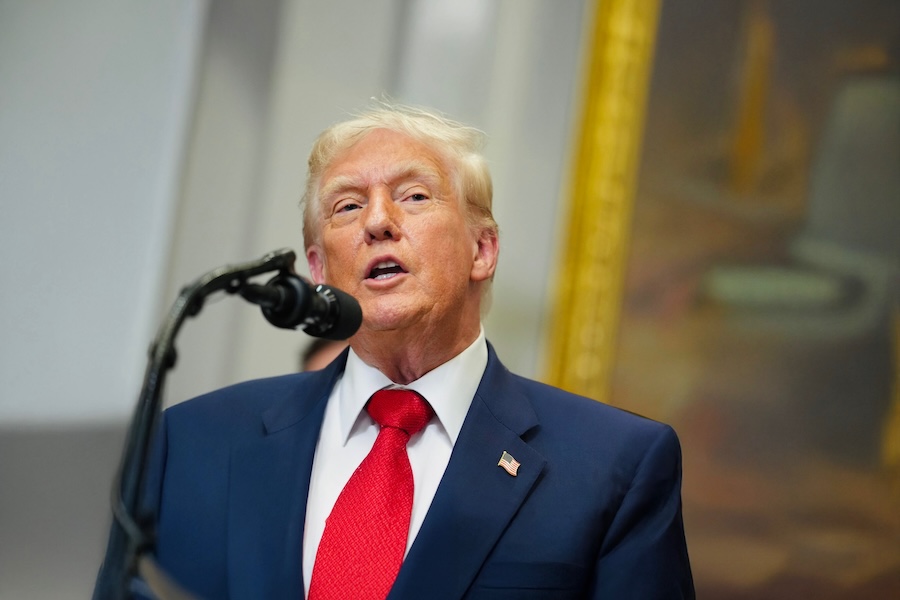
“With this historic executive order … we’re formally classifying as a weapon of mass destruction, which is what it is,” the president said while speaking at the White House. “No bomb does what this has done. 200,000 to 300,000 people die every year, that we know of. So we’re formally classifying fentanyl as a weapon of mass destruction.”
The executive order describes illicit fentanyl as fentanyl that is manufactured, distributed, dispensed or possessed in violation of the Controlled Substances Act. It does not make any reference to fentanyl used legally in medical settings.
Trump’s directive comes as the War Department has launched more than 20 strikes on drug-trafficking vessels operating off the coast of Venezuela, marking a significant shift in U.S. policy towards drug-trafficking, which has largely focused on seizures in the past.
While praising efforts from the Coast Guard, DEA and other agencies for record-breaking seizures of cocaine and other illicit substances, the Trump Administration has still contended that the ongoing strikes on drug-trafficking vessels are necessary. Back in September, Secretary of State Marco Rubio stated that “interdictions alone are not effective.”
“Interdictions have limited to no deterrent effect,” he added. “These drug organizations, they’ve already baked in the fact they may lose 5% of their drug shipments. It doesn’t stop them from coming.”
Fentanyl overdose is the leading cause of death for Americans between the ages of 18 and 45. According to Drug Enforcement Agency statistics, more than 107,000 people died from a drug overdose in the U.S. in 2023, with nearly 70 percent of those deaths being attributed to deadly opioids like fentanyl.
In addition to the policy of kinetic strikes on drug-trafficking vessels, the president earlier this year signed the HALT Fentanyl Act, which permanently placed all fentanyl-related substances into Schedule I, closing a loophole exploited by drug traffickers who create chemically altered versions of fentanyl to evade regulation.
Such substances had been temporarily classified under Schedule 1 — which is considered the most restricted category, with severe legal penalties for possession, distribution, or manufacturing — until the temporary designation expired on March 31, 2025.