
Serbia And The Democratic Republic Of Congo’s Rising Strategic Partnership – The Balkan
Please Follow us on Gab, Minds, Telegram, Rumble, GETTR, Truth Social, Twitter, and Facebook, Youtube
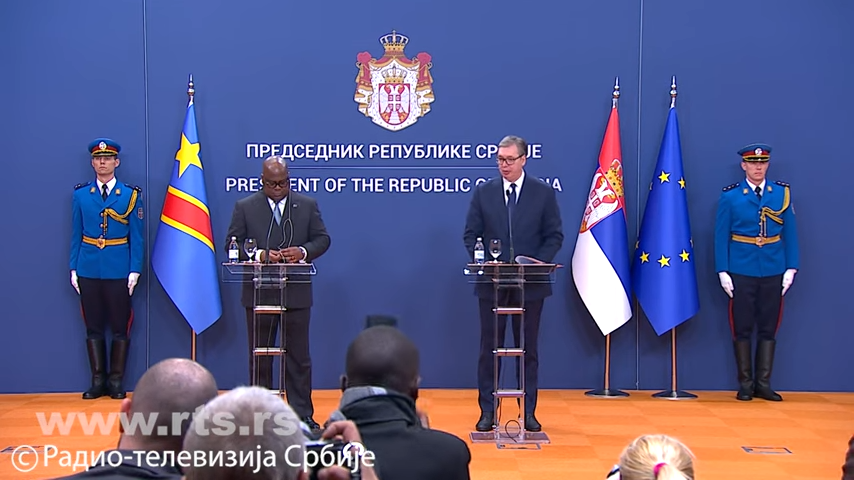
In an era of shifting global alliances, where emerging economies seek diversified partnerships beyond traditional Western or Eastern blocs, the relationship between Serbia and the Democratic Republic of the Congo (DRC) stands out as a compelling case of European-African cooperation rooted in historical solidarity. On November 29, 2025, Serbian President Aleksandar Vučić welcomed his DRC counterpart, Félix Tshisekedi, to Belgrade for a state visit that culminated in the signing of four bilateral agreements. This summit, described by Vučić as the dawn of a “new chapter of collaboration,” underscores a strategic pivot: Serbia, leveraging its post-Yugoslav diplomatic agility, is deepening ties with resource-rich African nations like the DRC, while Kinshasa finds in Belgrade a reliable partner for security and development amid eastern Congo’s protracted conflicts.
This analytical article examines the historical foundations, current dimensions, and strategic implications of Serbia-DRC cooperation. Drawing on mutual support for territorial integrity—Serbia on Kosovo, DRC on its eastern provinces—the partnership transcends symbolism, offering tangible benefits in defense, economy, and diplomacy. Yet, it also raises questions about sustainability in volatile contexts.
The bilateral bond traces back to the mid-20th century, when Socialist Federal Republic of Yugoslavia (SFRY), Serbia’s predecessor, championed anti-colonial struggles. In 1960, as the DRC gained independence from Belgium amid chaos, Yugoslav aid—technical, educational, and ideological—bolstered Patrice Lumumba’s nascent government. This culminated in the 1964 Agreement on Trade and Economic Cooperation, still in force today, symbolizing early economic pragmatism.
Both nations were founding pillars of the Non-Aligned Movement (NAM), launched at the 1961 Belgrade Conference. This shared ethos of sovereignty and multipolarity endures: Serbia, isolated by Kosovo’s 2008 independence (recognized by most Western states but not the DRC), reciprocates Kinshasa’s principled stance against fragmentation.
Security forms the partnership’s bedrock, driven by the DRC’s battles against M23 rebels and other militias in mineral-rich Kivu provinces. Serbia, with its robust arms industry (e.g., Zastava Arms), positions itself as a supplier of affordable, battle-tested equipment. A landmark 2023 military agreement, signed by DRC Deputy Defense Minister Samy Adubango Wotho and Serbian State Secretary Nemanja Starović, facilitates joint training, intelligence sharing, and arms transfers. Recent reports indicate Serbian and Bulgarian consignments of second-hand tanks, light weapons, and ammunition bolstering Congolese forces around Goma.
This cooperation echoes darker historical echoes: In 1997, during the First Congo War, a Serbian-led “White Legion” of ex-Yugoslav mercenaries defended Kisangani for Mobutu Sese Seko, training Zairian troops in AK-47 and sniper tactics.
Today’s state-level ties sanitize that legacy, focusing on capacity-building. For Serbia, it’s a market for its €1.5 billion defense sector; for DRC, it’s diversification from pricier Western suppliers amid U.S. and EU sanctions on conflict minerals.The 2025 summit explicitly addressed “security and defense,” with Tshisekedi thanking Vučić for backing DRC’s “sovereignty and territorial integrity.”
Potential expansions include Serbian expertise in counter-insurgency, vital as DRC’s army integrates ex-rebels under the stalled 2023 Luanda Roadmap.
Economically, the relationship is embryonic but promising. In 2019, Serbia exported €913,000 worth of goods to DRC (machinery, pharmaceuticals). The four 2025 agreements likely include economic pacts, building on visa waivers for diplomats. Serbia’s “World in Serbia” scholarships—expanded for Congolese students—foster human capital, potentially yielding future trade envoys.
Education and health round out the portfolio. Serbia’s scholarships have drawn Congolese youth, enhancing soft power, while health talks in 2025 address DRC’s Ebola scars and malaria burdens with Serbian pharma exports. Multilaterally, alignment in NAM and UN votes—e.g., on Palestine or climate—amplifies voices: DRC’s African Union heft bolsters Serbia’s EU candidacy narrative.
For Serbia, the DRC partnership diversifies foreign policy amid EU accession delays and Russian ties. It echoes Belgrade’s “African opening,” with similar pacts in Ethiopia and Zimbabwe, positioning Serbia as a non-aligned bridge to Europe. Economically, access to DRC’s $24 billion mineral output (critical for EVs) could fuel Serbian exports, while defense deals sustain jobs in Serbian defense industry.
For DRC, Serbia offers low-cost alternatives to French or Chinese influence, crucial as Tshisekedi eyes 2028 re-election amid instability.