
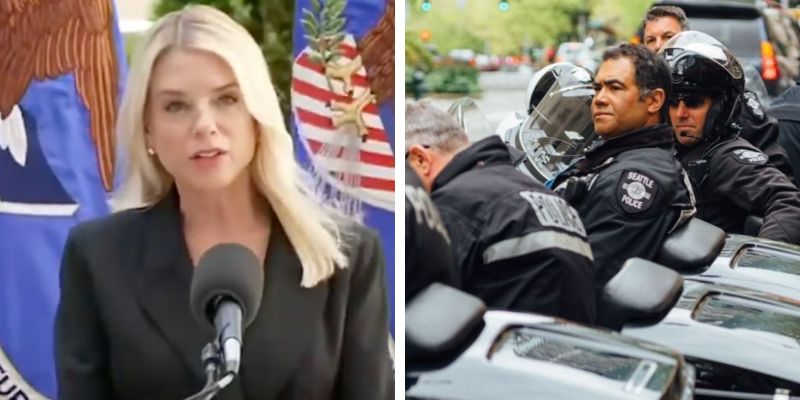
DOJ ends 13-year federal oversight of Seattle PD after case on excessive force
“It’s crushed morale, we’ve lost over half of the department, and it has decimated public safety.”
On Wednesday, the US District Court for the Western District of Washington formally recognized the successful completion of the consent decree in United States v. City of Seattle, returning complete control of the Seattle Police Department (SPD) to the city after more than a decade of federal oversight.
The 13-year consent decree addressed SPD’s use of force, crisis intervention, stops, detentions, supervision, and accountability.
“We congratulate the Seattle Police Department on its achievement of sustained substantial compliance with this consent decree,” said Assistant Attorney General Harmeet K. Dhillon of the Justice Department’s Civil Rights Division. “We are proud to stand by the men and women of the Seattle Police Department as federal oversight ends and the court returns full control of local law enforcement to the city.”
Acting US Attorney Teal Luthy Miller for the Western District of Washington added, “The Seattle Police Department has worked over many years to develop and implement policies and procedures that have transformed the department into an example for other police forces. Multiple Police Chiefs, city leaders, community stakeholders, and US Attorneys have supported that effort. I commend the hard work that has led to the end of the consent decree.”
The DOJ first launched its investigation in 2011 and, the following year, entered into the consent decree with Seattle after alleging SPD had engaged in a “pattern or practice” of excessive force. In 2023, the court terminated most requirements, and as of today, the decree has been fully dismissed.
Speaking on The Ari Hoffman Show on Talk Radio 570 KVI, Seattle Police Officers Guild (SPOG) President Mike Solan said the decree was less about reform and more about enriching a cottage industry of monitors, lawyers, and oversight staff.
“For close to 14 years, the tax base in the city of Seattle had put forth over $200 million into this process,” Solan said. “It’s crushed morale, we’ve lost over half of the department, and it has decimated public safety.”
Solan argued that the real grift fueled local oversight salaries. Members of the Office of Police Accountability and King County law enforcement oversight were paid six-figure sums, often while pursuing what Solan described as anti-police political agendas. “You’re getting paid by the taxpayers to do that work. So what incentive would you have to end that payment to your bank account? You’re gonna say we’re almost there, but not there, and you’re going to continue the grift.”
“The grift in this region continues,” he added, tying the oversight bureaucracy to the broader failures of King County’s recently exposed $1.5 billion social justice spending spree wih no accountability.
Solan also highlighted the timing of events leading up to the George Floyd riots. Just one week before Floyd’s death, city leaders and the DOJ had agreed that SPD was ready to exit the decree. “They held press conferences congratulating Seattle as a model department of reform,” Solan recalled. “Then George Floyd happens, and we’re back to square one. Five years later, we’re finally getting out again.”
As for why Mayor Bruce Harrell, a longtime supporter of the decree, suddenly moved to end it, Solan was blunt: “I think you’re going to need a public safety win for the election.”
Despite the failures, Solan praised his officers: “What I’m most proud of, despite the negative of this, I’m most proud of the men and women that did the work to get us into full and effective compliance. Cops are resilient. I’m proud to be a Seattle police officer and we are still here.”