
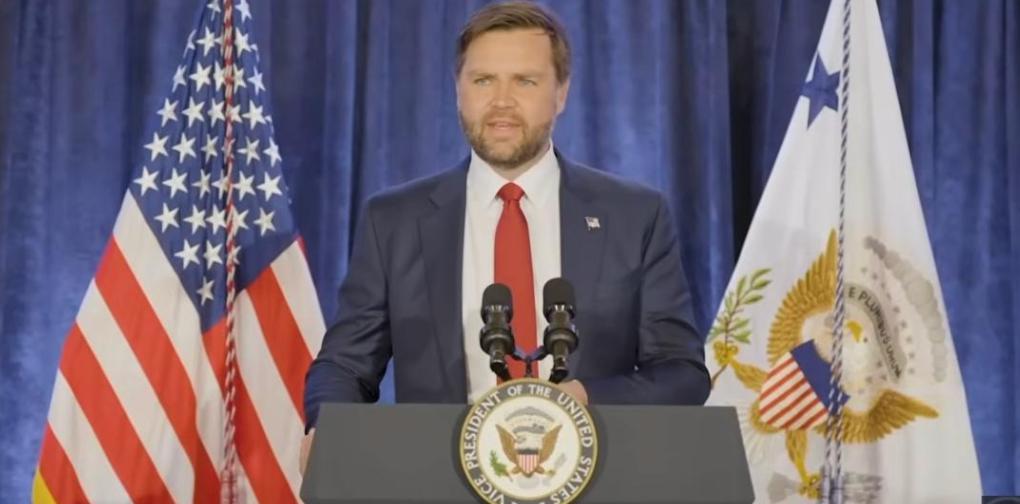
JD Vance breaks tie to advance rescissions bill targeting foreign aid, PBS, NPR
The rescissions package, approved by the House of Representatives last month, would eliminate approximately $8.3 billion from USAID and $1.1 billion from the Corporation for Public Broadcasting (CPB).
Vice President JD Vance cast two decisive tie-breaking votes in the Senate on Tuesday to advance a $9.4 billion spending rescissions package backed by President Donald Trump. The measure, which would claw back federal funding from a range of programs, including the US Agency for International Development (USAID) and public broadcasters NPR and PBS, is now headed into a marathon floor debate.
The Senate twice deadlocked at 50-50 on procedural votes to begin debate on the controversial bill. In both instances, Vance stepped in to break the tie and push the measure forward. The rescissions package, approved by the House of Representatives last month, would eliminate approximately $8.3 billion from USAID and $1.1 billion from the Corporation for Public Broadcasting (CPB).
Three Republican senators, Mitch McConnell of Kentucky, Lisa Murkowski of Alaska, and Susan Collins of Maine, broke ranks and joined all Democrats in opposing the measure. Despite that, the rest of the GOP caucus unified behind Trump’s push to slash federal spending, allowing the legislation to clear its final procedural hurdle with Vance’s help.
Now, the Senate begins up to 10 hours of debate, during which Democrats are expected to fiercely oppose the package, criticizing it for its deep cuts to foreign aid and funding for public broadcasting. Republicans are likely to stand firm, touting the bill as a necessary measure to rein in spending.
Following debate, the Senate will move into a so-called “vote-a-rama” in which lawmakers can offer up amendments. Among the expected changes is a GOP-backed amendment to preserve about $400 million in funding for the President’s Emergency Plan for AIDS Relief (PEPFAR), a Bush-era program aimed at combating HIV/AIDS globally. The proposed carveout has White House support and was seen as necessary to shore up wavering GOP votes, some of whom had voiced concern about cutting the program.
Senate Minority Whip John Thune (R-SD) said, “There was a lot of interest among our members in doing something on the PEPFAR issue. So that’s reflected in the substitute, and we hope that if we can get this across the finish line in the Senate, the House will accept that one small modification.”
However, the potential change could face resistance in the House, where Speaker Mike Johnson (R-LA) and members of the conservative House Freedom Caucus have urged Senate Republicans not to alter the bill. While the group has not explicitly threatened to sink the legislation, it has warned that any changes could jeopardize support.
The original House version of the rescissions bill passed narrowly in June, 214-212. If the Senate makes additional changes, such as the PEPFAR amendment, the modified version would return to the House for another vote before the Friday deadline.